2007 #14: The Great Hindustani Dhaba That Wasn’t

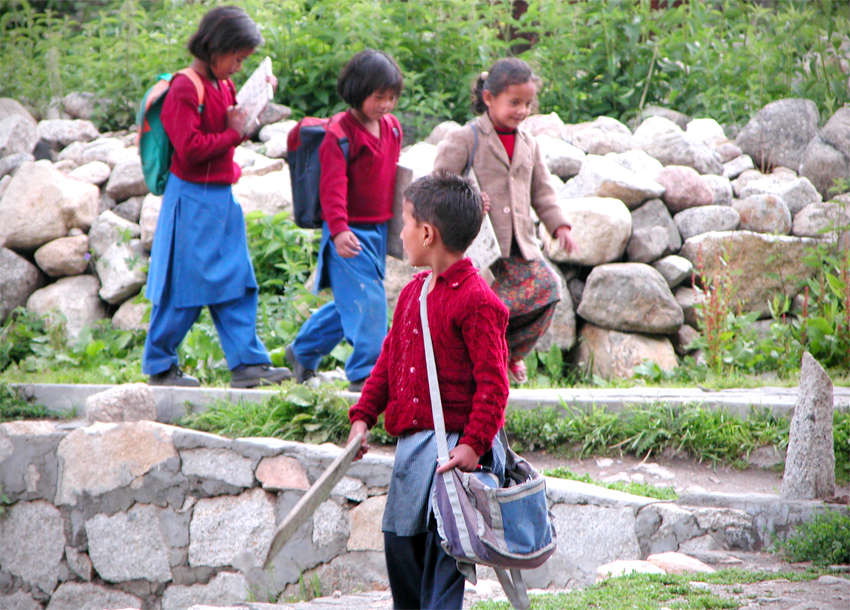
Kids coming home from school, carrying their slates, which are still used up in these parts. On the right you can see a 'Debta' post - very strong magic. Chitkul.

Kids coming home from school, carrying their slates, which are still used up in these parts. On the right you can see a ‘Debta’ post – very strong magic. Chitkul.

Something we came across here in Chitkul was the occasional “Debta” (sp) stones. There was often a patch nearby where a fire had obviously been going. These stones are two or three feet high, stand alone and are not to be touched. A local guy we chatted with (who’d been university educated) told us that when he was a kid and hadn’t learned about this taboo yet, he touched one of them and his skin erupted with horrible sores. So we made very sure to keep an eye out for them and not bang into any accidentally. Okay, it may not be part of our belief system, but we had no problem respecting the locals’ beliefs and customs.

After a wonderful day strolling around the village, we found out that the new restaurant that was being built (‘The Great Himalayan Restaurant’) and wasn’t open yet, was actually open if you could find the chef  ‘Bobby’ and sweet-talk him into cooking for you. He just wasn’t into crowds so he hid a lot. So I sat at the only other dhaba available (‘The Great Hindustani Dhaba’) while my partner went to use his charms on Bobby. The Great Hindustani Dhaba advertised on a large sign outside the door the following: ‘Breakfast, Lunch, Dinner, Chinese, Food, Chomin, Momo, Thuppa, Tea, Coffee, Cold drinks’. I grinned as various silly thoughts went through my head. How did they cook their Chinese? Did they have to chase them down first? In which case, were they tough to eat? Were they willing to serve them with Chomin, or were they a stand-alone dish?

The Great Hindustani Dhaba. Get your 2-minute noodles here...

The Great Hindustani Dhaba. Get your 2-minute noodles here…

I have no idea what a ‘thuppa’ is, but when we first got here we were delighted to see we could get Momo (Tibetan dumplings, a favourite of mine) at this dhaba. Except we couldn’t. Because the man who made the Momo had gone elsewhere (no further explanation). Upon enquiring about the ‘Chinese’ and ‘Chomin’ (Chow Mein), it turned out the afore-mentioned absent guy was also the cook of these things. The only thing the remaining guy could cook us in the late afternoon BEFORE dinnertime (at which time he apparently shuts the door) was a packet of Maggi 2-Minute Noodles each. And these took about thirty minutes to get to us from the time of asking. We were starting to catch on that all was not as meets the eye in this ONE AND ONLY daily eating establishment.

So I sat and sipped my chai (which this guy was able to brew with reasonable competance) and crossed fingers that Bobby and my partner got on well together. As it turned out, they did, and my partner came back with a 7.30pm dinner appointment for us. So a little later we left our room and went back down to the restaurant, and imagine our surprise when we found it half full of very loud-talking tourists who’s country of origin I will not mention here. The secret was out! So much for our quiet little tete-a-tete over candlelight with gentle music in the background. However, the food was varied and fabulous, and even if we couldn’t hear it over the talking, there was gentle music playing in the background.
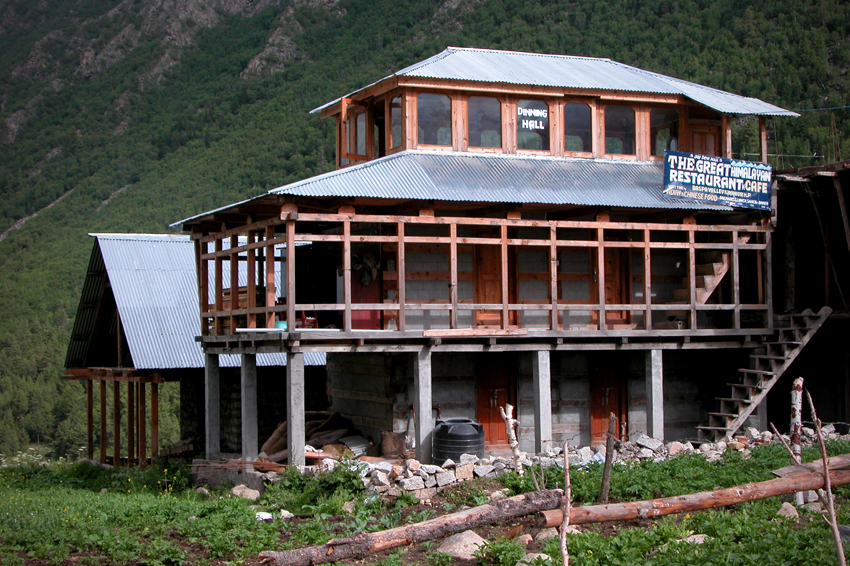
The Great Himalayan Restaura...

The Great Himalayan Restaura…

Having eaten, we wandered back to our room, indulged in a tot or two of Southern
Comfort, which always goes down so well in the mountain air, and danced under the stars to Santana with an audience of bats and a firefly or two.

The next day a few of the local women turned up, and after a few minutes of confusion it became clear that they wanted to see the little movie of my partner’s daughters (7 and 3 yrs) dancing back at home. They were absolutely delighted at this miracle of technology and the cuteness of the girls. We were to see these women go by every day after that and they always waved cheerfully or stopped for a quick chat.
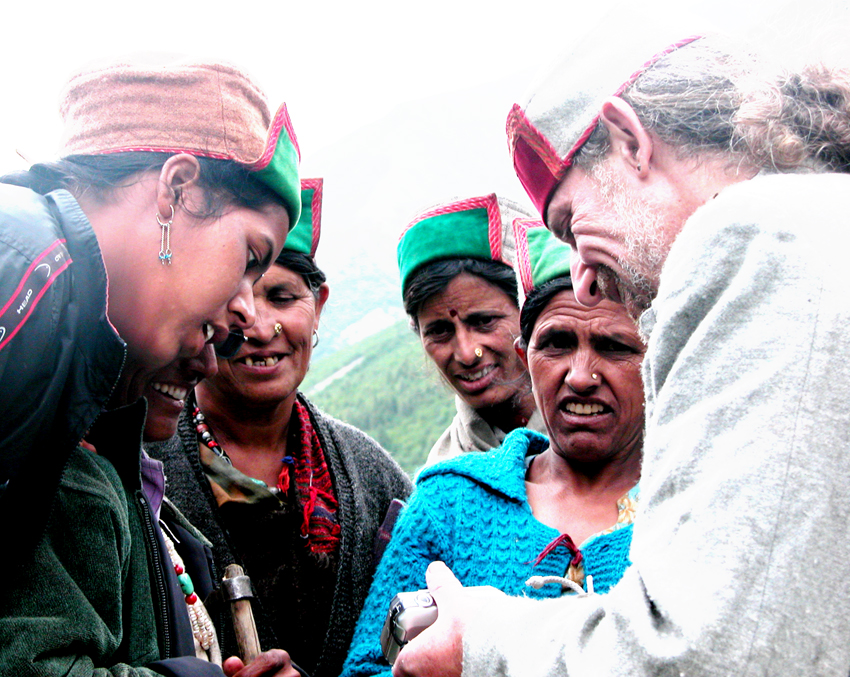
The local ladies marvelling at the technology we bought with us (digital camera) and getting all gaga over the cute little girls on the video.

The local ladies marvelling at the technology we bought with us (digital camera) and getting all gaga over the cute little girls on the video.

After breakfast and chai, I did some of my washing before it came crawling out of my backpack of it’s own volition. Mountain water is cold! My hands became so numb I had to take time out to warm them up again before wringing my clothes. We also acquired a couple of the local-style coats, tailor-made with goats wool (I think). This was most fortuitous, as there is no market here, no shops selling garments and when we enquired, we found that all the tailors in the village were too busy to take on any more work. I won’t say who or where we got these coats from, because as the days went by we noticed that we were the only foreigners wearing them, so we gathered it was just a quiet little transaction with a person who had somewhere along the line come to the conclusion that he’d feel okay about trading with us. This trade transpired while no one else was around and nothing more was mentioned, although we saw one or two double-takes by some of the locals, and the odd little grin in the corner of the mouth of the guy we got them from. These jackets are worth their weight in gold. They are extremely warm and very windproof, and we had no problem with the cold once we donned them. Apart from bedtime, they were to stay on us for the rest of our stay in the village.
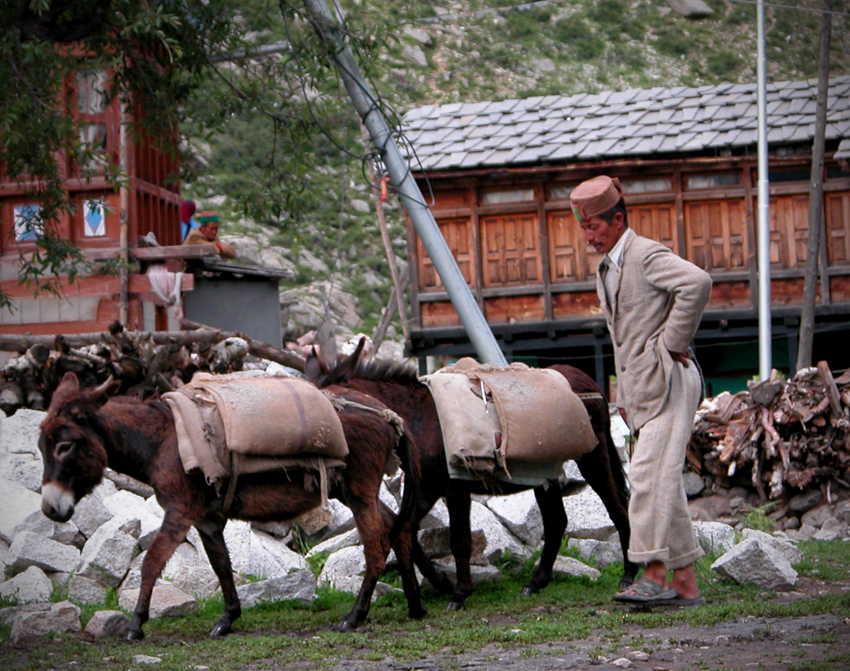
Donkey power and legs - the only form of transport in the village. This villager wears one of the beautifully-cut jackets favoured by the locals.

Donkey power and legs – the only form of transport in the village. This villager wears one of the beautifully-cut jackets favoured by the locals.

Again, we wandered around this beautiful place, looking and marvelling. We stopped and talked with four carvers who were working under a tarpaulin, on the new Debi temple in the temple square. They were very nice guys and their work is exquisite. Apparently they’ve been hired by the ‘Archeological Foundation’ or some such outfit, and they are given lodging, food, local brew and 250 rupees a day. This is a brilliant wage as far as India goes. No wonder they’re so content – they get to be creative and are paid very well for it. Wonderful.
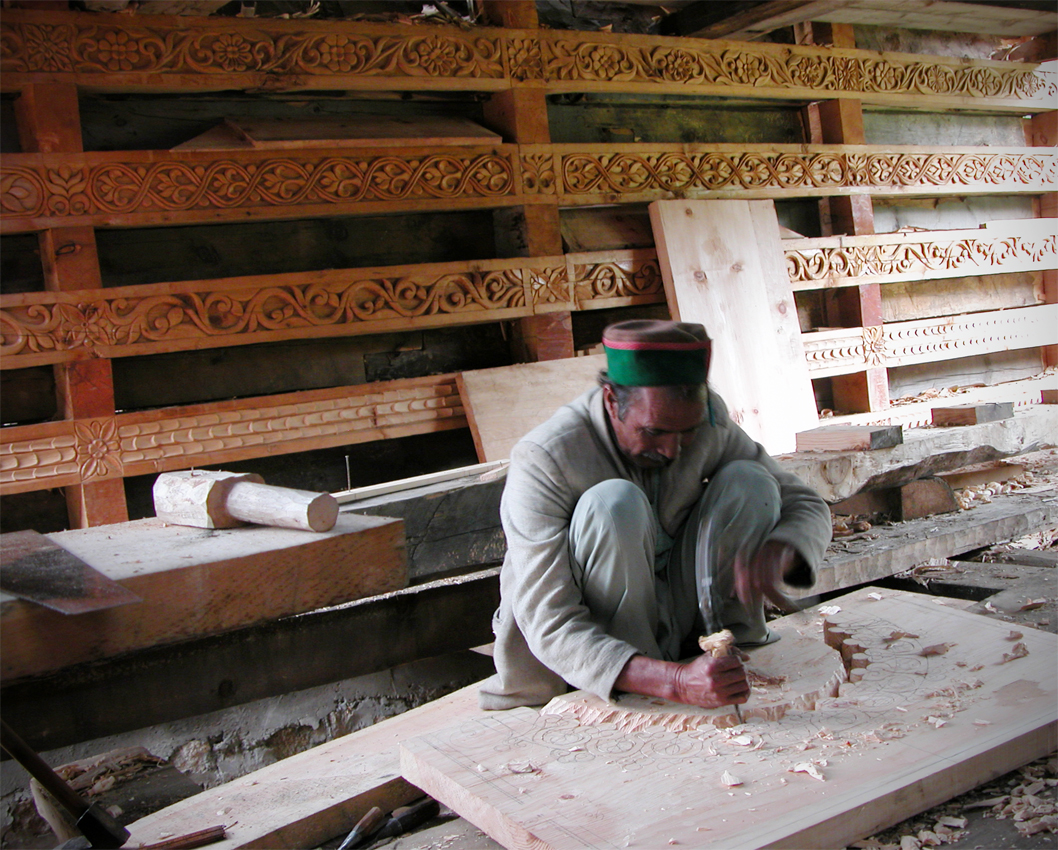
Carver at the Devi Temple construction site.
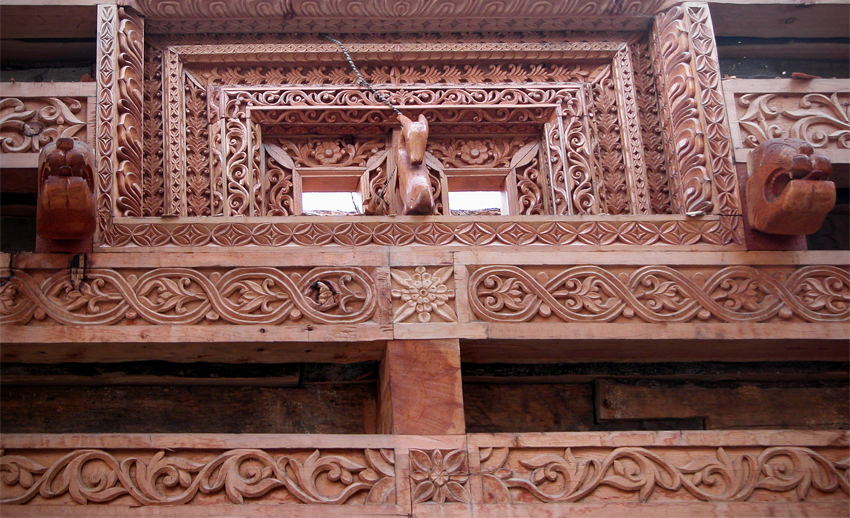
Carver at the Devi Temple construction site.

DSCN0001 72

2007 #13: Snow-Leopards and Flesh-Eating Snails

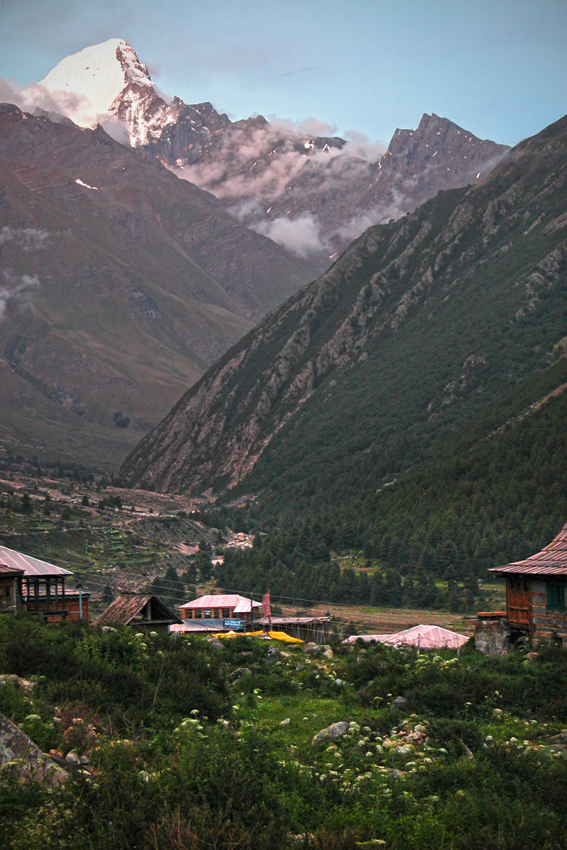
The village of Chitkul, below the Kinnaur Kailash mountain range, Himalayas. Over that snowy peak is Tibet.

The village of Chitkul, below the Kinnaur Kailash mountain range, Himalayas. Over that snowy peak is Tibet.

For me, the first night’s sleep in Chitkul was terrible. I think it was from overtiredness, but I went to bed super early, had a crappy sleep then woke up at about 4.30 am and ended up sitting outside on the veranda with my trusty torch wondering what to do with myself. I really needed to go to the toilet, but, having heard Raj’s (guesthouse owner) tale about a snow leopard taking his large, male donkey away for a meal a few months ago – just down the hill a little bit – I was just too much of a fraidy cat to go along the veranda and around the corner to the concrete box that contained the necessary hole in the ground. It was very, very dark, we were way up in the mountains, nobody else was around, and although I like to think I don’t resemble a donkey in any way, what if there was a snow leopard that needed glasses crouching in the shadows, just waiting for me to be at my most vulnerable with my pants down? Okay, I could close the bathroom door and be safely inside with whatever creatures lurk inside such less-than-salubrious surroundings, but what if the short-sighted snow-leopard sat outside the door and trapped me there until I could yell for help in the morning? These, and other wonderful-to-read-in-a-book-about-it-happening-to-somebody-else visions swam round and round in my head until I finally gave up and went back to bed with my legs crossed. My partner, as per usual, was comfortably asleep, blissfully unaware of the incredible dangers I had just avoided, and I lay there in our concrete cell waiting for dawn to throw it’s disgustingly cheerful sunrays over the mountain tops again and bring with it the sanity of daylight.

My partner, once awake and in a disgustingly cheerful mood, thought this was the funniest thing he’d heard in ages. He really can be quite unchivalrous at times. For the rest of our stay in Chitkul I had to put up with little jibes about snow leopards, killer donkeys and other such witticisms from him. I confess to wishing that he would one day be trapped in a toilet with a giant flesh-eating snail or that a crow would follow him round the village for a day trying to bite his bum every minute or so.

After a crappy cup of coffee and an absolutely wonderful three or so cups of chai, I began to feel a little more human again. The view from our guesthouse was fantastic. We were sitting amonst the giants of the world – huge mountains with glaciers and snowy tops, and clouds constantly dancing around them. Every few minutes the clouds shifted and we had an entirely different view to look at. And to our left, a wonderful snow-capped peak called Kinnaur Kailash. Over that peak – Tibet, the border only 60 km away. Mindboggling. It was hard to believe we were really there.

We went for a walk around the village. An absolutely exquisite place, steeped in history and culture. The buildings were made of wood, or wood and stone, with pitched roofs covered with slate, or in some cases, corrugated iron (a much cheaper alternative). There were many little storehouses dotted all over the village with hay stored in the roof, grains, etc, stored in the second story of some and (I think) oils stored in the bottom. They all had huge, old metal locks on the tiny doors. We figured they must send the kids in to deal with the stores, because the doors were too small for adults to go through.

A storehouse with an old padlock on one of its small doors. Each family has a storehouse of their own. Chitkul.

A storehouse with an old padlock on one of its small doors. Each family has a storehouse of their own. Chitkul.

A village elder walks up one of the village's steep paths. Chitkul.

A village elder walks up one of the village’s steep paths. Chitkul.

Chitkul houses constructed of wood and stone, with slate quarried locally on the roof of most of them.

Chitkul houses constructed of wood and stone, with slate quarried locally on the roof of most of them.

Every second step we took, we stopped to take photos, gasp with wonder then take more photos. There were waterways everywhere with little bridges and the occasional water-driven grinding mill across them. The people all wear ‘topi’ – wool-felt hats with one side that is green. They’re very gentle, quietly friendly people here and we had some nice conversations. On our way down the path by the primary school, we sat and watched some school children going home. They were going past a women who was crouched down with them, giving them something. As we got up to carry on walking, she rushed up to me and gave me two pieces of flat bread with what looked like a cake of honey and seeds on it. She gestured that one was for me and one was for my partner. I was quite bowled over by this kindness to complete strangers. And the food was absolutely delicious. Bless her lovely heart.

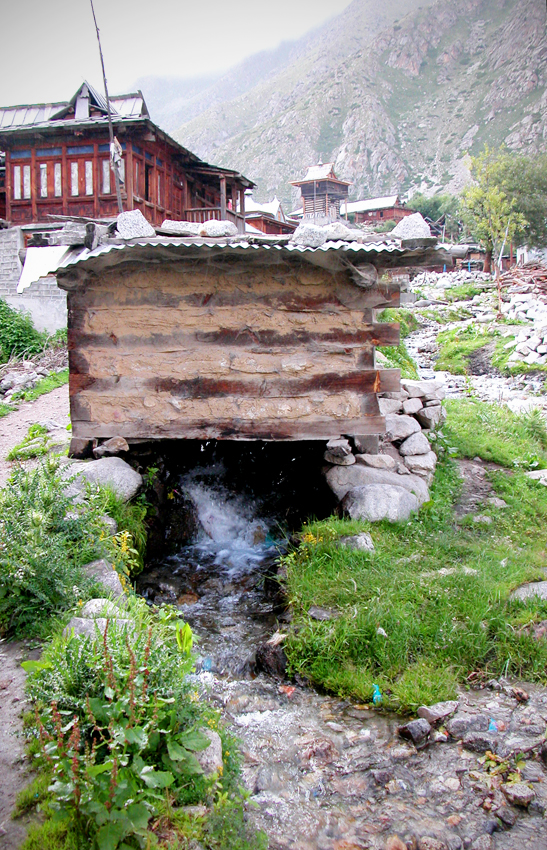
A millhouse straddles one of the streams in Chitkul.

A millhouse straddles one of the streams in Chitkul.

Beneath the millhouse. Chitkul.

Beneath the millhouse. Chitkul.

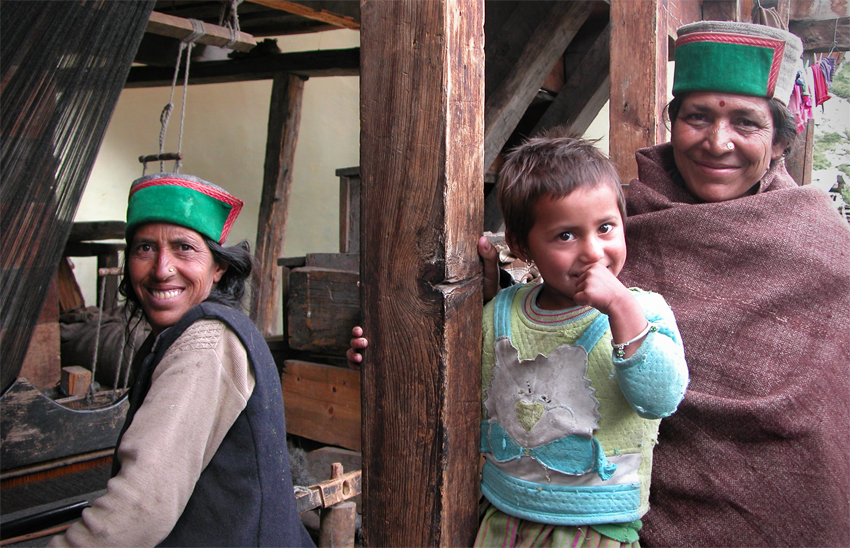
Local women with their 'topi's' (hats), denoting that they are 'Kinnauries' - from the Kinnaur districts of Himachel Pradesh, Himalayas. Chitkul.

Local women with their ‘topi’s’ (hats), denoting that they are ‘Kinnauries’ – from the Kinnaur districts of Himachel Pradesh, Himalayas. Chitkul.

2007 #12: Mountainside Audits and Goats Horn Cells

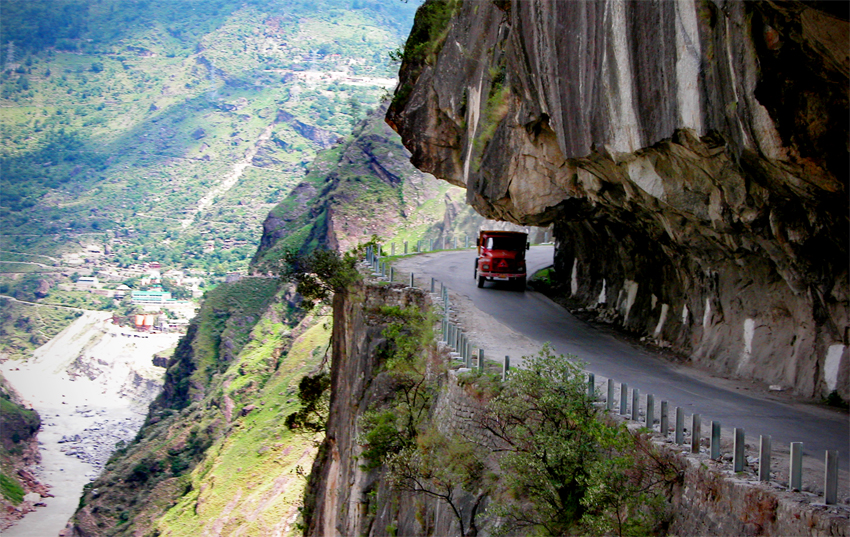
Part of the road we traveled to get to Chitkul, Himalayas.

Part of the road we traveled to get to Chitkul, Himalayas.

Finally, we got onto the final bus of our burst up the mountains. This was fun as well. We were tearing along quite nicely, when suddenly the bus driver screams to a halt after a landrover passes us. The guys got out of the landrover, boarded the bus and demanded to see everyone’s tickets. This turned out to be an audit! How about that – you’re most the way up the Himalayas and bureaucracy still manages to find you and wants to check the paperwork. Well, that’s India for ya.

The conductor of the bus told us it was not possible to get to Chitkul (where we were heading) but only to the village before it. But then we stopped at a river where the road had been washed away. The conductor got off, checked to possibility of us getting across it, and once we had made it across he charged us 10 more rupees and said they could take us to Chitkul after all. It seems that the road first has to be passable before they’ll admit to being able to take you there. This had me praying that there would be no monsoon rains for the few days we would be in this village, causing us to become local inhabitants until next summer.

Finally we made it to Chitkul. I had to kind of instruct my body how to get off the bus, because it certainly wasn’t volunteering by itself. I had no idea how tired a body can get until this journey. It was raining and cold and we were now at 3500 metres – the highest I’ve ever been. We’re talking 60 kms from the Tibetan border. Fortunately, there was a Guesthouse a few metres away. Unfortunately, they had decided to use their “summer season” to paint the place. Fortunately, they had an empty room with it’s own bathroom. Unfortunately, they were using enamel paint and this room was freshly painted. Try that after days of busrides and mountain roads coupled with complete exhaustion. We turned that room down and he showed us another one in another part of the building. If it wasn’t for the fact I was busting to go to the toilet, we may have applied a little more discretion to the choosing of our accommodation. As it was, we threw our packs down in the room and I raced off down the hall, down the dodgy steps and into the closet/dungeon they said was a bathroom. Having got that over with, I went back into the room and reeled at the smell of only slightly less fresh paint than the other room.

So we decided to go for a wander and see what other accommodation was available in this little town. Finally we found another place – Raj’s Guesthouse – after wandering up and down goat tracks for a while, and chose to stay there instead. We had the choice between the room with the curly goat horns above the door, or the one with straight goat horns. One of the ‘boys’ came back with us to help with our luggage, and no matter how we tried to explain to the owner of the first place that we just couldn’t live amongst paint fumes without throwing up on the floor of his wonderful and salubrious establishment, he still insisted we pay 100 rupees before he would allow us to book out. We hadn’t even been living there for an hour yet! In the end we paid, because we just had to get away from the fumes, and off we went back up the goat tracks to deposit our belongings in the goats-horn cell we had volunteered for instead.

Me at the goatshorn-topped entrance of our room, Chitkul.

Me at the goatshorn-topped entrance of our room, Chitkul.

Raj's Guesthouse, Chitkul. The top of the stone steps to the left is at exactly 3,500 meters from sea level.

Raj’s Guesthouse, Chitkul. The top of the stone steps to the left is at exactly 3,500 meters from sea level.

2007 #8: What’s in a Beggar’s Pockets?

The train ride back to Delhi was marvelous. And much to my very facetious satisfaction, my partner woke me up far too early for the train stop and we had to look out the window for ages until we got to our arrival point. Trivial, I know, but it did feel good not to be the only one overladen with cautiousness first thing in the morning on a train journey. And I got some really good shots with my camera, so I was pleased with that too.

We had a fairly laid-back day. We got back to our room, showered, then laid down again to get over the exhaustion of laying down all night. You only get about six or seven hours sleep while moving over hundreds of miles on a train and your subconscious is always semi-worried about your luggage, shoes and money staying put, so it isn’t the soundest of sleeps no matter which way you look at it.

Then, foolishly, we made our way back to the Railway Station and booked yet another bunch of train tickets. We simply never learn! This time, in three nights time, we will be on a train to Kalka, which will land at about 4.45 am. Far be it from us to travel during decent hours. But it does save money on accommodation and you get to where you’re going without having to stare out the window, sitting up, for seven to ten hours at a time. The novelty can wear off that no matter how wonderful a place is.

Then, with the favour of every god known to mankind, three-quarters of an hour later we will get on the ‘Toy Train’ (a very famous one) and go to Shimla. I say this because India is well-known for ‘India Time’, which does indeed stretch to the India Railway Company. So we’re really crossing our fingers that our first train will arrive in time to catch the second train. If not, we’ll play it by ear – what else to do? But it really is awesome to be able to go for hundreds of miles for a very small amount of money here. The India Railway System is the largest in the world and, if you ignore one or two idiosyncracies, is quite well organised.

From Shimla we will get on a bus (oh joy…) and go on to Sarahan. This is now in the Himalayas. Then, no doubt, we’ll flop around in a state of advanced exhaustion for a night or so then do it some more until we get to Chitkul. This is the village that is the last one in the Sangla/Baspa Valley that you can travel to without getting a permit. After that valley, with permit, you go more uphill then over into Tibet. We will not be doing that. We’re talking serious mountain-climbing here and I’m just not that into UP. It always hurts, you can’t breathe for panting, there’s always more UP in front of you, and then knowing my luck, there’ll be five days of cloudy weather and you can’t see a thing anyway! (Tis Monsoon season, after all.)

I wouldn’t be surprised if there was no internet there (in fact, I’d be pretty disgusted if there was – these are supposed to be remote, unspoiled villages) so I may not be in contact for close to two weeks. So there you go, you may just get a holiday from my ramblings, if you’re lucky.

Last night was cool. We sat around on the rooftop, yakking with a Kiwi, some Dutch, German, Indian and various other people. All well-travelled and all very nice with a great sense of humour. Then it RAINED. When it rains here in Monsoon, it really really means it. Cools the air nicely though. This morning, pretty much like last night. I’m enjoying just keeping still while I can. And eating meat. Rishikesh is a vegetarian area, and while I love vegetarian food, every now and again I need to eat something that once was moving.

Also, we saw a beggar here yesterday that we see regularly every year. We actually heard him coming and knew it was him. My partner calls him the God Botherer. He crawls along the ground with one leg stretched out in front, calling upon the mercy of all the gods he knows of and holding a stainless steel cup. We happened to be sitting with one of the shopkeepers at the time, and he told us that this guy is actually very rich. He makes about 1000 rupee a day, which is a fortune over here, and has pockets sewn all over the inside of his rags to hide his money in. Why he prefers to keep grovelling in the dirt and mud and doesn’t invest in a fleet of rickshaws instead, I don’t know, but he does put on a good act and really does earn his money. And it’s terribly entertaining to watch. Especially since last year I spied him standing up, shaking out his clothes and yakking with one of the locals, then getting back down on the ground again to continue his theatrics. I wonder if he owns a mansion in the hills somewhere and retires there in the off-season to swan about on his verandah and watch his peons work in the fields? I wouldn’t be surprised.